

Monster: The Lizzie Borden Story Review
Few murder cases have endured in the public imagination quite like Lizzie Borden’s. In 1892, Lizzie Borden was accused of killing her father and stepmother with an axe in Fall River, Massachusetts. She was acquitted, but the mystery surrounding the case never truly faded. More than a century later, Netflix revisits that history with Monster: The Lizzie Borden Story, an eight-part psychological drama created by Ryan Murphy and Ian Brennan.
Rather than offering a straightforward retelling, the series turns the infamous case into something darker and more intimate, a story about suspicion, repression, desire and the mythology that can grow around a woman society cannot quite explain.
Ella Beatty Is the Reason to Watch
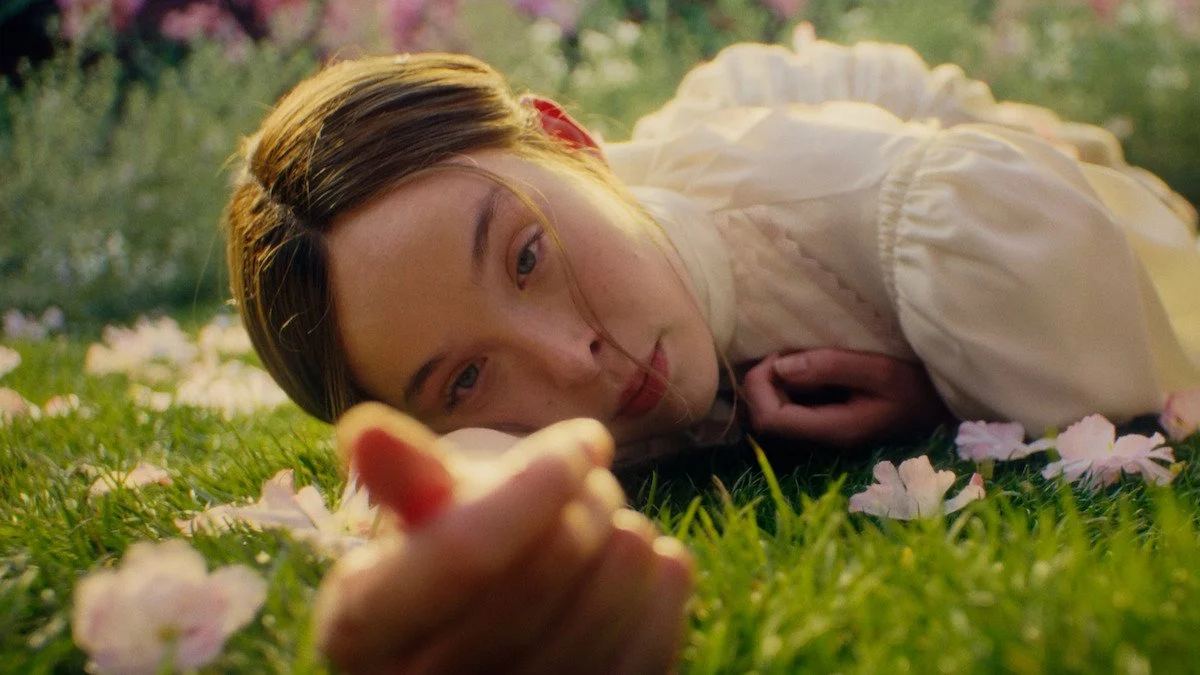
At the centre of the series is Ella Beatty, who plays Lizzie with an intriguing balance of vulnerability and unpredictability. The performance avoids reducing Lizzie to either victim or villain. Instead, Ella Beatty presents her as a young woman navigating the suffocating expectations of a wealthy Victorian household, allowing uncertainty to linger around almost every expression and decision.
Her relationship with Bridget “Maggie” Sullivan, played by Vicky Krieps, adds another emotional layer to the story. Their connection offers Lizzie a sense of intimacy and escape from the world closing in around her.
Ella Beatty carries that tension beautifully. Even when the writing becomes heightened, there is something quietly magnetic about watching her hold Lizzie together while everything around her begins to fracture.
Stylish, Strange and Very Ryan Murphy
Visually, Monster: The Lizzie Borden Story embraces its darkness. The period setting is richly rendered, while the series moves between repression, violence, sexuality and dark humour with the heightened sensibility that has become part of Ryan Murphy’s signature. It is lavish, theatrical and occasionally excessive but that excess is also part of its appeal.
The bigger question is how much of what we are watching belongs to history and how much belongs to imagination. The series takes considerable creative liberties, filling the gaps in the historical record with its own interpretation of Lizzie’s inner world and the circumstances surrounding the murders.
For viewers looking for historical accuracy, that can be frustrating. For those willing to treat it as a dramatic interpretation, it gives the story room to become something more psychologically ambitious.
Does It Work?
Mostly, although not without its flaws.
The performances are compelling, the atmosphere is unforgettable and the central mystery remains powerful precisely because the real case never delivered a definitive answer. But the series occasionally seems determined to outdo itself, adding more provocation when restraint might have made certain moments more effective. That is where Monster: The Lizzie Borden Story becomes most interesting and most uneven.
Beneath the blood and spectacle are ideas about female rage, repression and the way society turns complicated women into myths. At its strongest, the series allows those ideas to breathe. At its weakest, the desire to shock becomes louder than the story itself. Still, it remains difficult to dismiss.
If dark period dramas, psychological true crime and deliberately theatrical television are your kind of viewing, Monster: The Lizzie Borden Story deserves a place on the list. Just don't expect a history lesson. This is Lizzie Borden as imagined through the Monster lens: unsettling, glamorous, provocative and intentionally uncertain.
Our verdict: 8/10
